
Sunday, April 21, 2013

Friday, April 19, 2013
Pope Benedict XVI - Catholics and Public Policy
 Pope Benedict XVI - "It is imperative, that the entire Catholic community in the United States comes to realize the grave threats to the Church's public moral witness."
- Pope Benedict XVI - "We see the need for an engaged, articulate, and well-informed Catholic laity [to participate] in public debate about the issues that are determining the future of American Society."
Friday, April 12, 2013
St. Faustina
" O my Lord. Inflame my heart with love for You, that my spirit may not grow weary amidst the storms, the sufferings and the trials"
~ ~St. Faustina ~
~ ~St. Faustina ~


Tuesday, April 9, 2013
St. Padre Pio on Temptations- Excellent
Temptations against faith and purity are the merchandise offered by the enemy, but do not fear him, rather, despise him. As long as he makes an uproar it is a sign that he has not yet possessed the will. Don't be upset by what you experience through the work of this rebellious angel. Let your will always be contrary to his suggestions, and live tranquilly, because you are not at fault, but rather, you please God and gain progress for your soul. St. Padre Pio (Letters III, p. 426)

broad-diverse-defense-of-marriage-at-supreme-court
http://blog.heritage.org/2013/03/10/broad-diverse-defense-of-marriage-at-supreme-court/
Broad, Diverse Defense of Marriage at Supreme Court
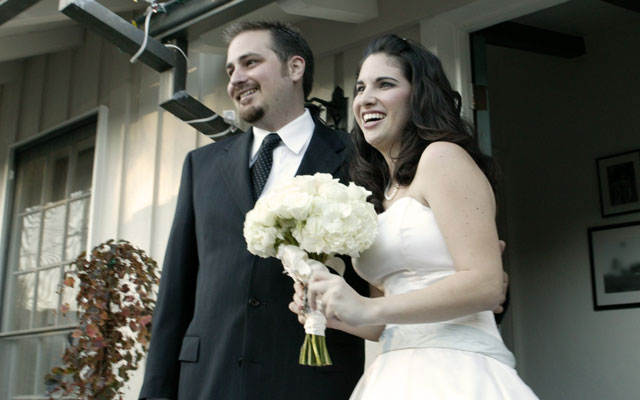
Ken Weingart Stock Connection Worldwide/Newscom
Scholars have filed more than 50 amicus briefs with the Supreme Court urging it to uphold California’s Proposition 8 and the federal Defense of Marriage Act (DOMA). While the media seems intent on ignoring these briefs and hyping the briefs on the other side, the sheer number and quality of the briefs in defense of laws recognizing marriage as the union of a man and a woman is impressive.
Austin Nimocks, Senior Counsel at the Alliance Defending Freedom, explains the significance:
During the Supreme Court’s 2011-2012 term, an average of only 10 amicus briefs per case were filed. And in the historic landmark case of Roe v. Wade, only 26 total amicus briefs were filed.By comparison a combined total of 58 amicus briefs were filed in support of Prop 8 and DOMA. The pro-marriage arguments are deep, rich, well-reasoned, common sense- and common good-based, and worthy of serious reflection by the Court and any other American interested in the future of our most important social institution.
Here are just a few of the arguments:
Family law expert Helen Alvare argues that society’s interest in the upbringing of children and marriage’s unique ability to serve that interest explains the government’s involvement in marriage. Tracing the consequences of the past half century’s “retreat from marriage,” and its disparate effects on America’s poor, Alvare argues that redefining marriage to exclude sexual complementarity would cause social harms to increase. The consequences of redefining marriage is the focus of the amicus brief that I filed with my co-authors Robert P. George and Sherif Girgis.
Former U.S. Attorney General Ed Meese responds to charges that marriage laws violate legal guarantees of equal protection and argues that same-sex and opposite-sex relationships are not similarly situated:
Given the near-universal view, across different societies and different times, that a principal, if not the principal, purpose of marriage is the channeling of the unique procreative abilities of opposite-sex relationships into a societally beneficial institution, it is clear that same-sex and opposite-sex couples are not similarly situated with respect to that fundamental purpose.
A group of international jurists and academics points out that not until the year 2000 did any political body recognize same-sex unions as marriages, that even today only 12 non-U.S. jurisdictions recognize same-sex unions as marriages, and that “same-sex marriage is not required by international human rights norms”:
The European Court of Justice, the European Court of Human Rights, the United Nations Human Rights Committee, the French Constitutional Court, the Italian Constitutional Court, the German Federal Constitutional Court, and the New Zealand Court of Appeal have all rejected the notion that same-sex marriage is a constitutional or human right. (emphasis added)
Indeed, a group of historians and other professors explain the historical consensus that existed prior to the year 2000: “While the procedures and incidents of marriage have varied over time and across cultures, its primary form and legal meaning have remained remarkably constant. … Marriage as an opposite-sex institution is a universal phenomenon.”
A team of social science professors present the scientifically robust data that exists on family structure and child wellbeing.
Indeed, the only studies that were based on large, random, representative samples tended to reveal … significant differences in the outcomes of children raised by parents in a same-sex relationship and those raised by a married biological mother and father. What is clear is that much more study must be done on these questions. But there is no dispute that a biological mother and father provide, on average, an effective and proven environment for raising children. And it is reasonable to conclude that a mother and father function as a complementary parenting unit and that each tends to contribute something unique and beneficial to child development.
Eminent political scientists Leon Kass and Harvey Mansfield caution the Court against accepting politicized science: “Claims that science provides support for constitutionalizing a right to same-sex marriage must necessarily rest on ideology. Ideology may be pervasive in the social sciences, especially when controversial policy issues are at stake, but ideology is not science.”
The Attorneys General for 20 states defend the rational basis of their states’ marriage law and the irrationality of redefining marriage: “No limiting principle for excluding other groupings of individuals.” And 37 scholars of federalism and judicial restraint argue that “[p]rinciples of federalism and judicial restraint urge this Court to exercise caution when considering the expansion of constitutional rights in areas of contentious social dispute.” The laboratories of democracy—not unelected judges—should make marriage policy for the nation.
Several briefs argue that trying to cast gay and lesbian Americans as a “suspect class” rests both on bad science and bad politics. For example, Johns Hopkins Hospital and Medical School chief psychiatrist Dr. Paul McHugh explains the academic research on sexual orientation:
Sexual orientation is neither a “discrete” nor “immutable” characteristic in the legal sense of those terms.… Scholars do not know enough about what sexual orientation is, what causes it, and why and how it sometimes changes for the Court to recognize it as the defining feature of a new suspect class.
A brief from the Concerned Women for America points out that gay and lesbian Americans arehardly a politically powerless class. In fact, they have the President of the United States advocating on their behalf. If marriage policy is to be changed, it ought to be done legislatively.
While the media takes little note of their voices, many Americans who experience same-sex attraction are opposed to redefining marriage. Two separate briefs (here and here) make their case.
Likewise, two additional briefs (here and here) argued that laws defining marriage as the union of a man and a woman are nothing like laws that prevented African-Americans and whites from marrying. The Becket Fund for Religious Liberty argues that when courts create rights to same-sex marriage they create new hazards for religious liberty.
Many, many more briefs could be highlighted, and the Alliance Defending Freedom has listed a selection of them here. In the coming days Heritage will spotlight in greater detail these briefs. Marriage matters and the Court should recognize the Constitutional authority of citizens and their elected officials when it comes to making marriage policy.
Aquinas - Smart guy :)
"After grace had been revealed, both learned and simple folk are bound to explicit faith in the mysteries of Christ, chiefly as regards those which are observed throughout the Church, and publicly proclaimed, such as the articles which refer to the Incarnation"
- St. Thomas Aquinas, Doctor of the Church, 1225-1274
"Therefore, as regards the primary points or articles of faith, man is bound to believe them, just as he is bound to have faith; but as to other points of faith, man is not bound to believe them explicitly, but only implicitly, or to be ready to believe them, in so far as he is prepared to believe whatever is contained in the Divine Scriptures. Then alone is he bound to believe such things explicitly, when it is clear to him that they are contained in the doctrine of faith."
- St. Thomas Aquinas, Doctor of the Church, 1225-1274
"After grace had been revealed, both learned and simple folk are bound to explicit faith in the mysteries of Christ, chiefly as regards those which are observed throughout the Church, and publicly proclaimed, such as the articles which refer to the Incarnation"
- St. Thomas Aquinas, Doctor of the Church, 1225-1274
"Therefore, as regards the primary points or articles of faith, man is bound to believe them, just as he is bound to have faith; but as to other points of faith, man is not bound to believe them explicitly, but only implicitly, or to be ready to believe them, in so far as he is prepared to believe whatever is contained in the Divine Scriptures. Then alone is he bound to believe such things explicitly, when it is clear to him that they are contained in the doctrine of faith."
- St. Thomas Aquinas, Doctor of the Church, 1225-1274
- St. Thomas Aquinas, Doctor of the Church, 1225-1274
"Therefore, as regards the primary points or articles of faith, man is bound to believe them, just as he is bound to have faith; but as to other points of faith, man is not bound to believe them explicitly, but only implicitly, or to be ready to believe them, in so far as he is prepared to believe whatever is contained in the Divine Scriptures. Then alone is he bound to believe such things explicitly, when it is clear to him that they are contained in the doctrine of faith."
- St. Thomas Aquinas, Doctor of the Church, 1225-1274

Subscribe to:
Posts (Atom)